
In care settings, challenging situations are part of the job. What matters is how those moments are handled. The difference between escalation and resolution often comes down to preparation. Real CPI training success stories show how the right approach can change outcomes, not just in the moment, but long term.
Across nursing homes, care homes, retirement villages, and semi-independent homes for young people aged 14+, Support Workers rely on practical skills to navigate behaviour, maintain safety, and build trust.
De-escalation in a High-Stress Moment
In one semi-independent home, a young person became increasingly agitated after a change in routine. The situation could have escalated quickly. Instead, the Support Worker recognised early signs of distress and used CPI techniques to reduce tension.
Rather than reacting immediately, they created space, adjusted their tone, and allowed the individual time to regain control. Within minutes, the situation settled.
This kind of response is not instinctive. It comes from training and repetition. For teams supported by a support worker staffing agency, these skills are essential. Staff often step into new environments, and having a consistent approach to de-escalation ensures stability for young people who rely on predictable responses.
Maintaining Dignity in Senior Residents Care
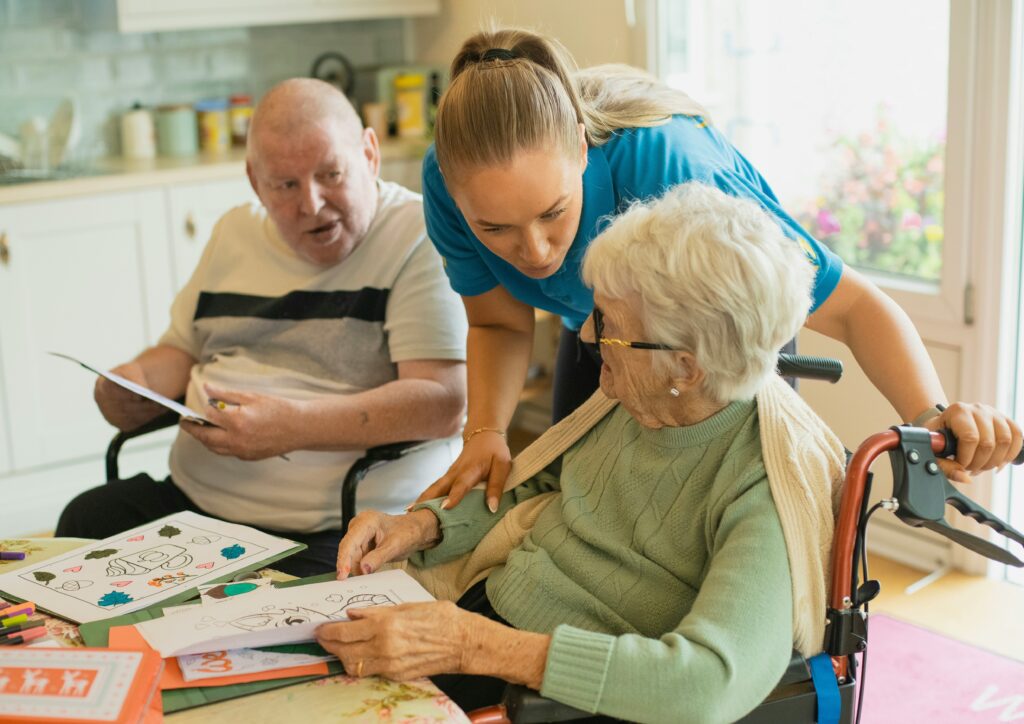
In a Senior Residents Care setting, a resident experiencing confusion became resistant to assistance during a routine activity. Without the right approach, this could have led to frustration on both sides.
The Support Worker applied CPI techniques by slowing down the interaction, offering reassurance, and adjusting communication to match the resident’s pace. Instead of forcing the situation, they worked with the resident’s comfort level.
The result was a calm interaction that preserved dignity and avoided escalation. In environments supported by reliable nursing home staffing, these moments are critical. They shape how residents experience care on a daily basis.
Supporting Team Consistency Across Shifts
Another common challenge is inconsistency between staff members. In one care home, different approaches to behaviour were creating confusion for residents.
After a focused training refresh, the team aligned their responses using CPI principles. Support Workers began using the same language, techniques, and timing when managing situations.
This consistency reduced incidents and improved communication across shifts. For organisations working with staffing agencies for nursing homes, this alignment is especially valuable. It ensures that whether staff are permanent or temporary, the approach remains the same.
Responding Quickly with Confidence
In fast-moving environments, hesitation can make situations worse. One Support Worker in a retirement village described how CPI training helped them act more decisively.
When a resident showed early signs of agitation, the Support Worker recognised the behaviour pattern and intervened early using de-escalation techniques. The situation did not progress further.
Confidence plays a major role here. Training gives Support Workers the ability to respond without second-guessing. For teams operating within elder care staffing solutions, this confidence supports both safety and efficiency.
Adapting to Different Care Environments
Support Workers often move between settings, especially when working with a care staffing agency. Each environment has its own dynamics, but the core principles of CPI training remain consistent.
In semi-independent homes, the focus may be on guiding behaviour and building independence. In retirement villages, it may be about reassurance and routine. In all cases, the ability to adapt while maintaining a structured approach is key.
CPI training provides that foundation. It allows Support Workers to adjust their response while staying aligned with best practices.
The Impact Beyond Individual Incidents
While individual success stories are important, the broader impact is just as significant. Consistent use of CPI techniques leads to:
- Fewer escalated incidents
- Improved communication within teams
- Greater trust between Support Workers and those in their care
For providers offering healthcare staffing in Slough, these outcomes contribute to stronger care environments overall. When staff are prepared and aligned, the quality of care becomes more predictable and reliable.
Experience That Supports Real-World Care
CPI training is not just about managing behaviour. It is about creating safer, more consistent environments where both Support Workers and those in their care feel supported.
Careline Solutions understands the importance of placing staff who are not only qualified, but prepared for real-world challenges. With over 25 years of combined experience in health and social care, the focus remains on providing dependable Support Workers across nursing homes, care homes, retirement villages, and semi-independent settings.
Operating across Berkshire, London, Buckinghamshire, Hertfordshire, Hampshire, Oxfordshire, and Surrey, Careline Solutions supports care providers with staffing that prioritises consistency, communication, and compassionate care.
When Support Workers are equipped with the right training and placed in the right environment, the results are clear. Safer interactions, stronger relationships, and care that meets the needs of every individual, every day. Work with us.